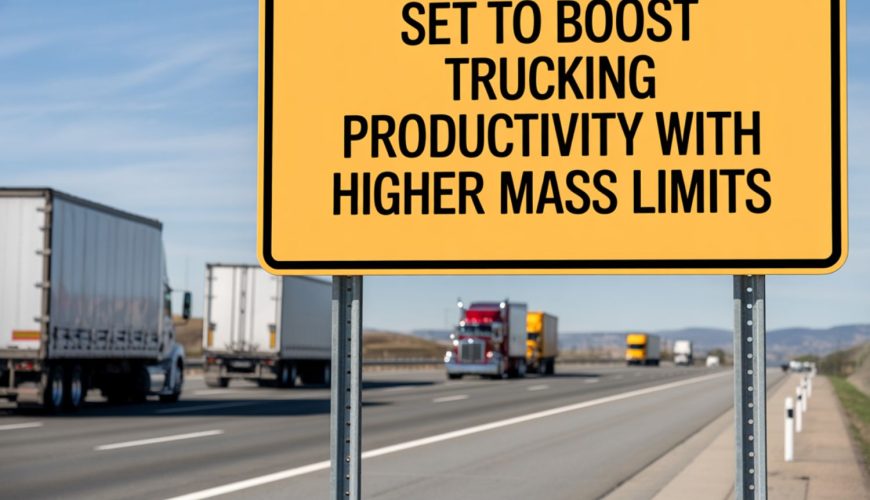
The heavy vehicle industry is set for a significant productivity boost, with the National Heavy Vehicle Regulator (NHVR) fast-tracking a new national notice that will increase mass limits across much of the road network.
The proposed changes, expected to take effect as early as May 2026, aim to give operators greater flexibility while reducing administrative burden — at a time when supply chains remain under pressure.
What’s Changing?
The new notice will effectively lift General Mass Limits (GML) to align with current Concessional Mass Limits (CML).
Under the changes:
- Combinations below 55 tonnes will gain an additional 1 tonne
- Combinations above 55 tonnes will gain an additional 2 tonnes
Axle group limits will also increase:
- Tandem axle group (dual tyres): up to 17 tonnes
- Tri-axle group (dual tyres): up to 21 tonnes
These adjustments bring higher carrying capacity to a broader range of operators without the need for additional approvals.
Less Red Tape for Operators
One of the most significant changes is the removal of the requirement for Mass Management accreditation to access these higher limits.
The update also removes the one-tonne tri-axle mass transfer allowance, simplifying how mass limits are applied in practice.
For many operators, this means:
- Fewer compliance requirements
- Less administrative overhead
- Faster access to improved productivity
Who It Applies To
The new notice will apply to a wide range of heavy vehicle combinations operating under GML.
However, it’s important to note:
- PBS (Performance-Based Standards) vehicles are not included
- PBS operators must continue to follow the limits and conditions outlined in their specific approvals
Bus axle group limits will also remain unchanged.
Why This Matters for the Industry
The changes are being introduced in response to ongoing challenges across the freight sector, including:
- Rising operating costs
- Increased demand on supply chains
- Pressure to improve efficiency without compromising safety
By allowing operators to carry more per trip, the new limits are expected to:
- Improve freight productivity
- Reduce the number of trips required
- Lower operating costs over time
- Ease pressure on supply chains
At a practical level, this means more efficient use of vehicles and resources across the network.
Collaboration Across Government and Industry
The NHVR has worked closely with state road agencies and local governments to develop the notice, with final implementation subject to road manager approvals.
Local authorities will still have the ability to apply conditions or restrictions where required to protect infrastructure and ensure safe operations.
The regulator has also released supporting materials, including fact sheets, to help operators understand the changes and how they apply.
What Operators Should Do Next
With the changes expected to roll out soon, operators should start preparing now by:
- Reviewing current vehicle configurations and mass limits
- Understanding how the new limits apply to their fleet
- Checking for any local road conditions or restrictions
- Staying updated as final approvals are confirmed
A Step Toward Greater Efficiency
This fast-tracked notice represents a practical step toward improving productivity in the heavy vehicle industry without adding complexity.
At Logbook Checker, we see initiatives like this as a positive move toward balancing efficiency, compliance, and safety — helping operators get more out of every trip while navigating an increasingly demanding transport environment.